From status symbol to mobility tool
What companies expect from company cars today.
The company car has long played a special role in Germany.
It stood for position, responsibility and professional success. But this image is changing: today it is viewed much more pragmatically in many companies.
It should make employees mobile, make everyday work easier and function reliably. Less symbol, more tool. Less prestige, more productivity.
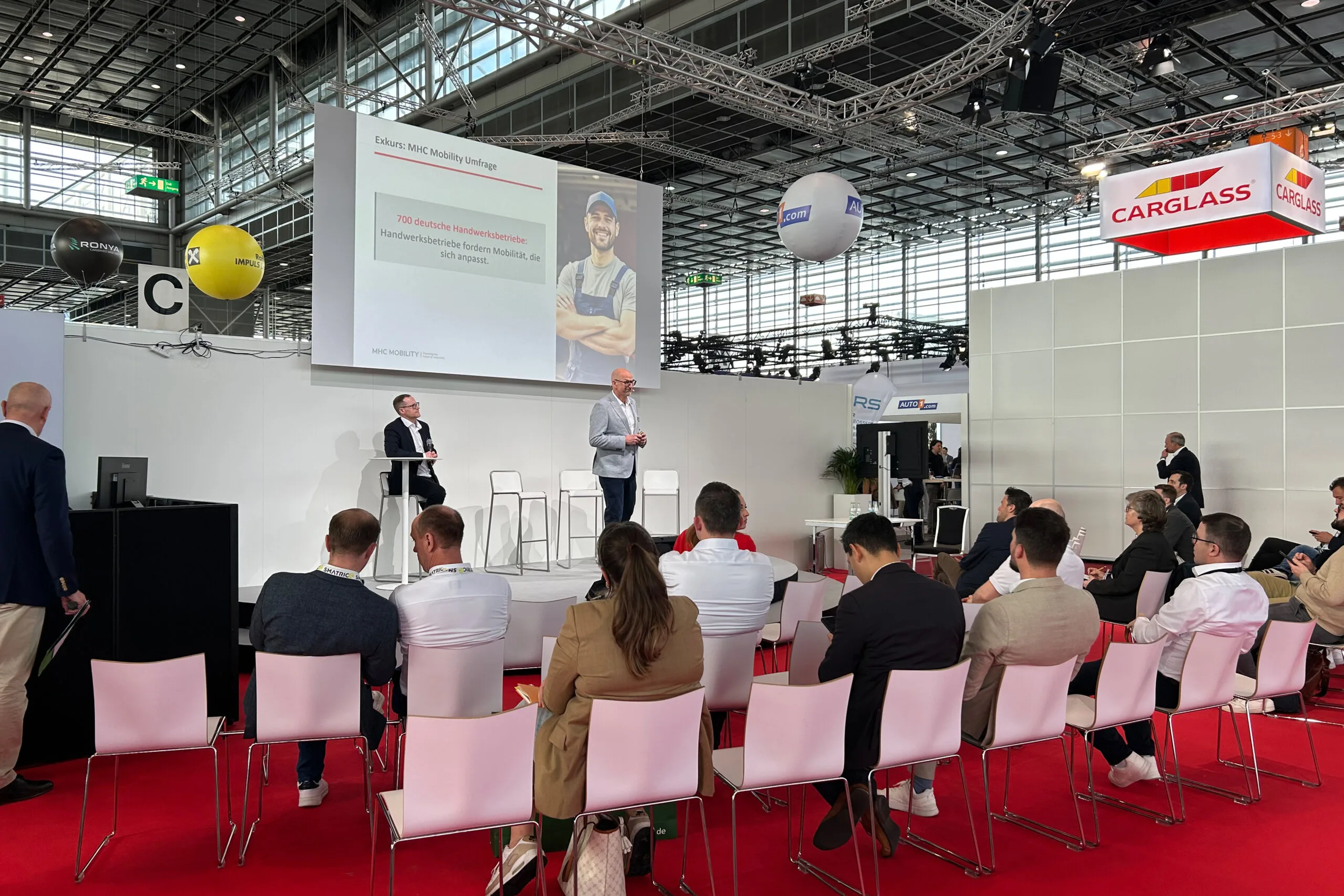
Our latest survey by the Omniquest Institute clearly shows this change: for 79% of respondents from companies with company cars, the focus is on the need for mobility – for example for field service, technology, service or sales. Only 21 percent see the company car primarily as a benefit for motivating and retaining employees.
Costs and effort count
When choosing a company car, the focus is on economic and practical criteria. 45 percent of respondents cite low costs as one of the most important factors. 42 percent attach particular importance to minimizing maintenance, service and insurance costs.
This shows that companies want mobility that remains calculable and causes little work internally. It’s not just about the monthly rate, but about the entire effort involved in the vehicle, service, tires, insurance and replacement.
It is also striking that always driving the latest model hardly plays a role. Less than nine percent cite this as an important factor. The decisive factor is whether the vehicle can be used reliably, economically and in line with requirements.
Electric cars have arrived
There is also movement in terms of drive systems. Electric cars were named by 46% of respondents as the preferred future drive type in the company fleet, putting them on a par with gasoline-powered vehicles. Hybrid vehicles come in at 31 percent and diesel at 29 percent.
The vehicle fleet of the future will therefore become more diverse. Classic drive systems will remain relevant, while the importance of electric and partially electrified models is growing. 59% of respondents from companies with company vehicles prefer at least one electrified form of drive.
For companies, this means that they need to take a closer look at which vehicle and which drive is suitable for which application. Flexibility is becoming more important, especially when switching to new drive systems – for example, to test vehicles in everyday use and make adjustments if necessary.
Company cars are allocated as required
The allocation of company cars is also predominantly decided on a functional basis. 56 percent of those surveyed stated that vehicles are allocated according to area of responsibility or necessity. 35 percent cite position or remuneration level as a criterion. Only nine percent report individual agreements in the employment contract.
This brings the actual task of the vehicle more into focus: Which vehicle best supports which activity? What is the right running time? Which cost structure is sustainable?
The more diverse the requirements become, the less suitable rigid standard solutions are. Service, sales, project business and electrification each require different vehicles, runtimes and services.
Our conclusion
Corporate mobility is therefore not becoming less important. It is becoming more demanding.
Companies need vehicles that fit the task, remain economical and cause as little administrative effort as possible. At the same time, requirements are increasing due to different budgets, new drive systems and more diverse usage scenarios.
For mobility providers, this means that it is no longer enough to provide vehicles. The key is to make mobility easier to manage – with reliability, cost transparency, advice and services that are geared towards actual needs.
The company car is not disappearing. It is changing its role: from a status symbol to a pragmatic tool for companies that need to remain agile. To stay in the picture: We at MHC Mobility always offer the right toolbox for this.