Electromobility: Almost every second trade business already drives electrically
But the breakthrough is faltering
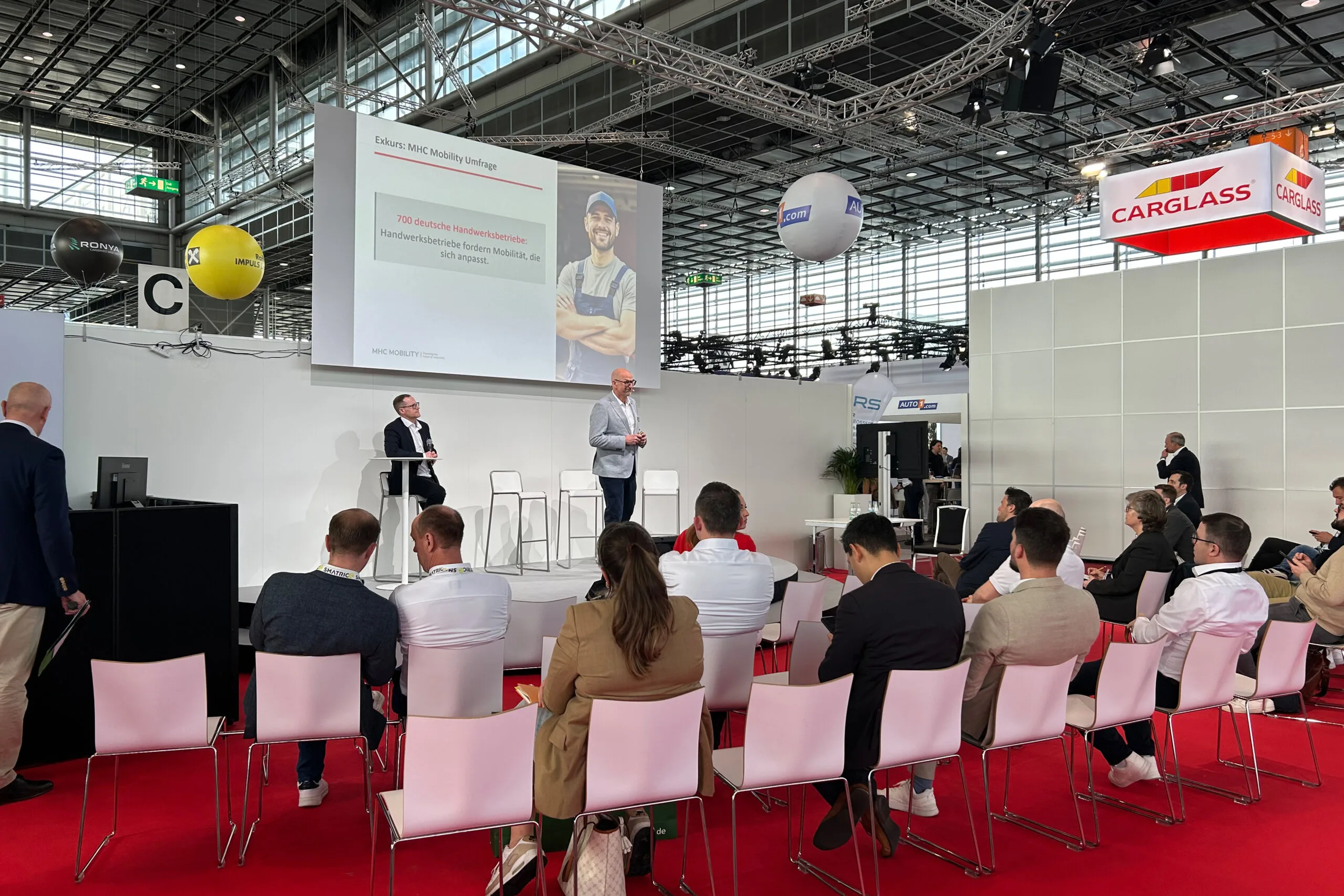
Representative MHC survey: 42% of trade businesses use electric vehicles, a further 28% are planning to switch – but structural hurdles are still slowing down electrification
A recent representative survey of German trade businesses by MHC Mobility shows that 42% already use e-vehicles for their mobility, while a further 28% are planning to make the switch or are looking into it intensively. However, despite this impressive rate of 70% e-mobility affinity, the study reveals considerable structural obstacles that are delaying the widespread electrification of the industry.
Tension between readiness and implementation
The detailed analysis initially reveals an interesting finding: just under a quarter of respondents (24%) do not see any obstacles and are open to electric vehicles. At the same time, however, clear barriers are also apparent: 40 percent cite charging and parking problems in first place, followed by the high purchase costs (38 percent). 22% criticize the lack of suitable vehicle models, 17% criticize inflexible contract models.
Charging infrastructure as a critical bottleneck
It is particularly revealing that loading and parking problems are the biggest obstacle. One possible reason for this is that many trade businesses are under increasing pressure from their clients to be sustainable. Public tenders as well as private clients are increasingly asking for environmentally friendly transportation to the construction site. At the same time, companies are calculating very carefully – an e-transporter that cannot be reliably charged is simply not practical.
This tension also explains why many companies are hesitant to purchase e-vehicles despite a high general willingness to do so. Although the skilled trades sector is much more open to e-mobility than is generally assumed, specific structural hurdles are blocking rapid implementation. Tradespeople in particular need reliable, affordable solutions quickly – not compromises. Sustainability is increasingly becoming a business factor.
Advice gap as an underestimated factor
Our survey also reveals a gap in advice: 11 percent of companies feel unsure about selecting suitable vehicles and planning the necessary infrastructure. Here, people often underestimate how complex the changeover actually is. After all, it’s not just about the vehicle itself, but also about charging planning, route optimization and backup strategies for emergencies.
Smaller companies in particular are often overwhelmed by the variety of options and the long-term commitments of classic leasing contracts. A two-person business cannot afford to make the wrong decision over 36 months. If the e-vehicle doesn’t work, it threatens the company’s existence.
Flexibility as the key to the market success of e-vehicles
These findings reflect a fundamental change in mobility requirements: away from standardized solutions and towards individually adaptable concepts that are geared towards the reality of the respective company.
17 percent of respondents cite a lack of flexible contract models as an obstacle. Many companies would like to try things out before committing themselves. This is understandable – after all, they are often investing in their livelihood. That’s why we at MHC Mobility have specifically expanded our range to include flexible terms and trial options to meet this need.
Outlook: Evolution instead of revolution
Despite the hurdles, we are convinced that the electrification of trade fleets will continue – albeit in an evolutionary way. The change will take place gradually, driven by improved technology, falling costs and increasing customer pressure. Those who set the right course today and offer realistic, flexible solutions will guide an entire industry through this transformation process. We at MHC Mobility have accepted this challenge.